
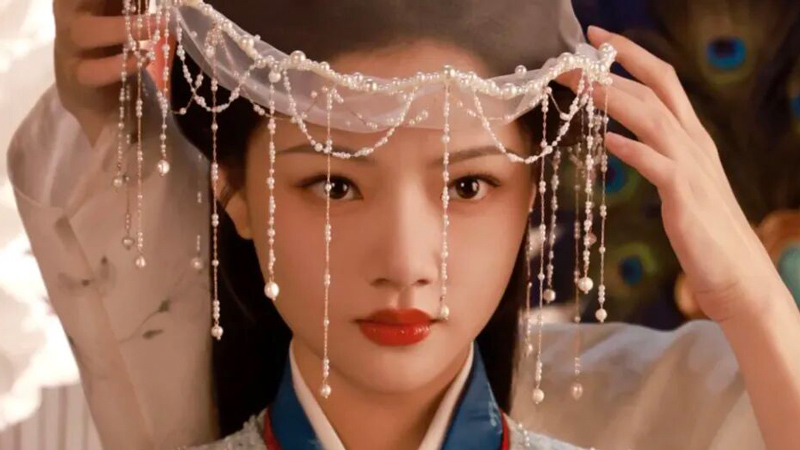
Ren Min (任敏) has always been a talented actress, but her ancient costume looks in previous dramas often drew mixed reactions. Some viewers felt her round, soft face—with its gentle jawline and slight baby fat—lacked the ethereal coldness expected of classical beauties. Then came her role in the period drama A Splendid Match (良陈美锦). Suddenly, the same face looked transformed. The secret? A single eyebrow shape: the Liu Mei (柳眉), or “willow leaf eyebrow.”
This slender, curved brow has softened her features, elongated her face, and brought out a quiet, elegant charm that perfectly fits the Zhong Shi (中式) classical aesthetic. It’s not heavy makeup or elaborate headpieces—just a thin line of ink-like pigment that has changed everything. Why does this ancient brow shape work so well on her? And why does it feel more and more captivating the longer you look? The answer lies in history, face shapes, and a design philosophy that knows exactly when to hold back.
Ancient Roots
The Liu Mei wasn’t invented by the costume team of A Splendid Match. It is one of the longest-lived traditional eyebrow styles in Chinese history. Its features are unmistakable: long, thin, and gently curved, with a soft upward tilt at the inner corner that slowly descends toward the outer tail. There are no sharp angles. It looks like a brushstroke painted with diluted ink—lighter at the head, gradually darker and longer at the tail. That floating, fragile beauty reminded ancient people of willow leaves swaying in the wind, hence the name.
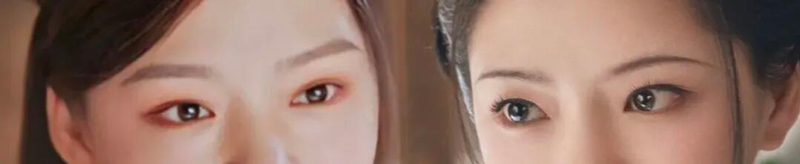
Tracing its origins, women in the Warring States period already used burnt willow branches to darken their eyebrows. By the Han (汉) dynasty, brow makeup had its first golden age, and the prototype of the willow leaf brow appeared. Legend says that Zhuo Wenjun (卓文君), wife of the poet Sima Xiangru (司马相如), popularized a similar “distant mountain” brow—long, soft, and elegant. Paintings from the Eastern Jin (晋), such as Nü Shi Zhen Tu (女史箴图) and Luo Shen Fu Tu (洛神赋图), show women with thin, arched brows just like it. This shape was already mainstream more than a thousand years ago.
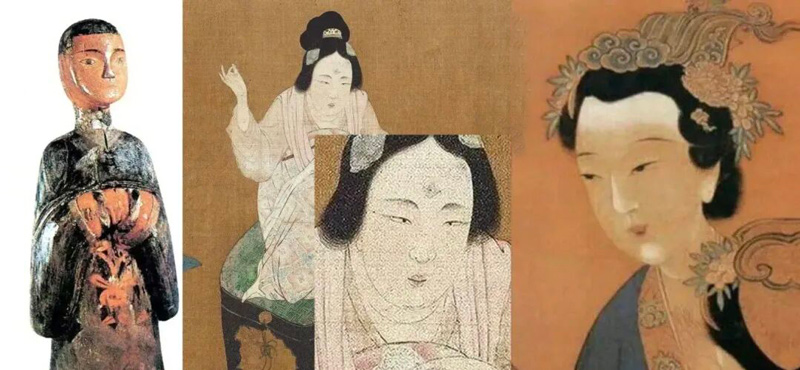
During the Tang (唐) and Song (宋) dynasties, the Liu Mei became a standard part of women’s makeup. The Tang dynasty boasted more than ten fashionable eyebrow styles, such as Mandarin Duck Eyebrows and Small Hill Eyebrows, yet the willow-leaf eyebrow remained timeless. After the high Tang period, aesthetics shifted from plumpness to elegance, and the slender willow brow gained even more favor. By the Song dynasty, it was everywhere: palace ladies, village women, all drew this shape to show gentleness and dignity. And the materials evolved too—from burnt willow twigs to Shi Dai (石黛) in the Han, then to luxury Luo Zi Dai (螺子黛) from Persia in the Sui and Tang. Each upgrade made the Liu Mei more refined. Clearly, ancient people never took eyebrows lightly.
Face-Fixing Magic
The real genius of the Liu Mei lies in how it interacts with a woman’s face shape. Ren Min has a round, full face with a soft jawline and a bit of baby fat. That kind of face can look wider or shorter on camera, which is why some called her previous ancient looks “childish” or “not stunning enough.” But the willow leaf brow changes that. Its slender, vertical lines visually lengthen her face. The eye is drawn upward from the rounded cheeks to the delicate curve of the brow. The effect is subtle, like a gentle “face lift” done with nothing but a brush.
Unlike Western brow styles—which favor straight, sharp, angular shapes to emphasize strong bone structure and three-dimensional impact—the Liu Mei is all about curves and softness. It has no harsh boundaries. The lighter inner head and gradually deepening tail create intentional “blank space” between the eye and the brow. That reduces visual clutter, making the face look smaller, more three-dimensional, and more elegant. The baby fat no longer reads as immature; instead, it becomes part of a softer, more refined noble lady. It doesn’t fight her features—it flows with them.
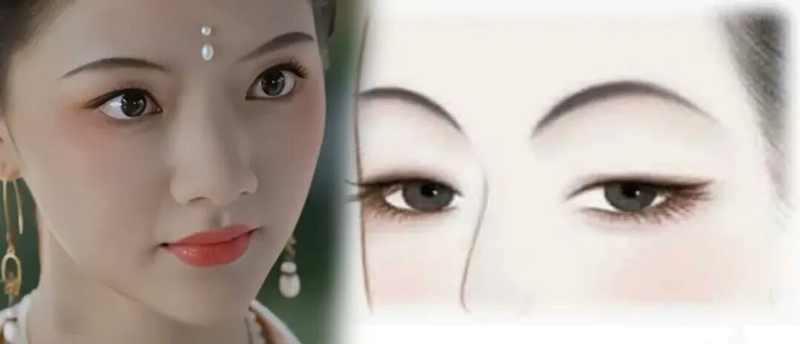
This is the core of Zhong Shi classical aesthetics: everything is about going with the grain. Don’t carve the face into something it’s not. Don’t use heavy lines or aggressive angles. Instead, use tiny, thoughtful adjustments—a curved line here, a bit of fade there—to quietly optimize proportions. The willow leaf brow does exactly that. It’s humble, almost invisible, yet the change it brings is undeniable. For someone like Ren Min, whose face never fit the typical “oval, sharp-chinned” beauty standard, this ancient brow shape finally lets her look like herself—and like a classical painting at the same time.
A Quiet Comeback
For years, period dramas in China often ignored traditional brow shapes. Actresses wore thick, straight “Korean flat brows” or overly sharp, high-arched eyebrows that had nothing to do with any dynasty. It was a missed opportunity. But recently, things are changing. Shows like The Rise of Ning (锦绣安宁) and A Splendid Match are paying more attention to authentic Zhong Shi makeup—from eyebrows to headpieces to clothing. Ren Min’s willow leaf brow isn’t just pretty; it’s historically informed. It respects the past without being a museum copy.
What’s more, she wears it with confidence. In many of her earlier scenes, she had bangs covering her forehead. Now, she pulls her hair back fully, exposing the brow and letting it do its job. That boldness is part of the beauty. The Liu Mei doesn’t hide or distract—it reveals and enhances. And it works on modern faces too. More and more young women are trying this shape in real life, drawn by its soft, flattering effect on round or square faces. It proves that ancient wisdom doesn’t have to stay in the past.
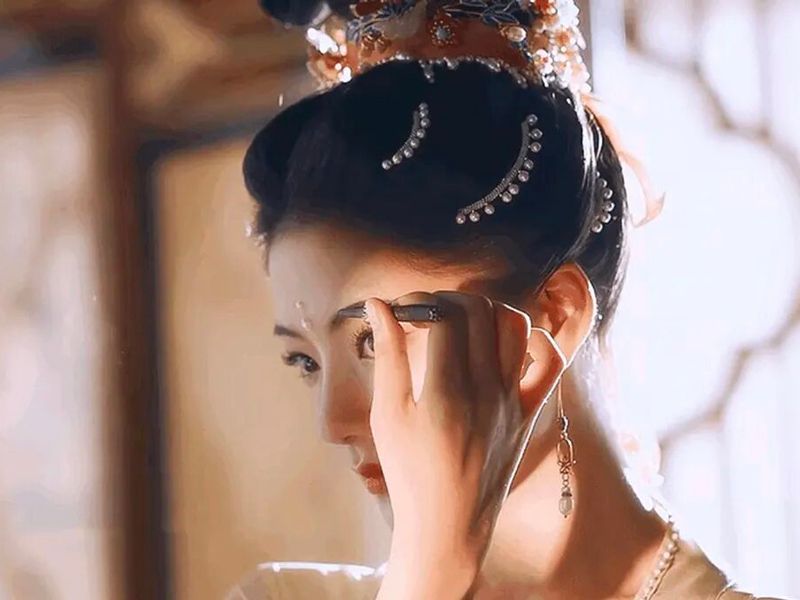
So why does this single eyebrow shape feel so satisfying to watch? Because it carries centuries of observation about the human face. It knows that beauty doesn’t come from adding more—more color, more angles, more drama. It comes from subtraction, from the right line placed with restraint. Ren Min’s Liu Mei in A Splendid Match isn’t a trend. It’s a reminder: sometimes the smallest detail makes the biggest difference. And when a tired old eyebrow shape makes a comeback, it’s not nostalgia. It’s good design finally being recognized again.